

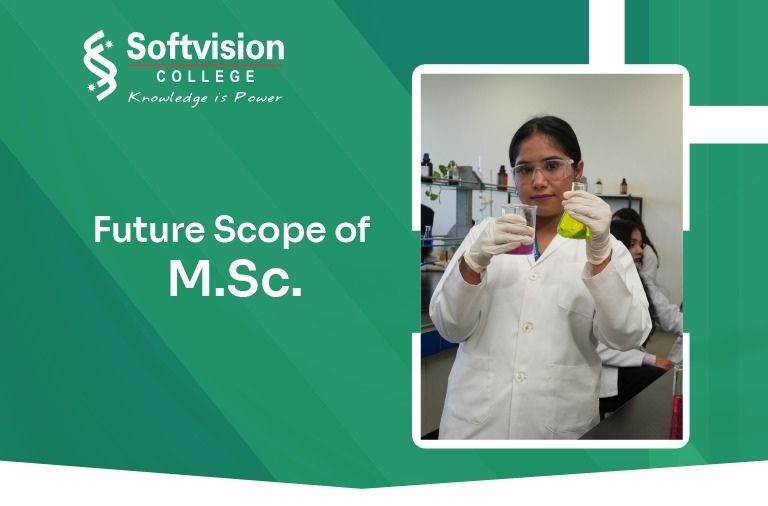
Choosing M.Sc. Pharmaceutical Chemistry isn’t just selecting another postgraduate degree it’s aligning your career with one of India’s fastest‑growing scientific fields. If you’ve wondered whether this course is worth your effort, time, and investment you’re in the right place. In this guide we’ll explore the industry outlook, career opportunities, real salary potential, skills that matter, and why this master’s degree is increasingly relevant today.
1. Indian Pharma Industry The Growth Engine Behind Your Career
Before we talk about jobs and pathways, let’s understand the engine that fuels them India’s pharmaceutical industry. The more the sector grows, the more opportunities for specialists in pharmaceutical chemistry.
According to government‑backed industry reports:
- India is one of the world’s largest producers of pharmaceutical products by volume, supplying around 20% of global generic medicines.
backed by IBEF data on India’s exports and production. - The Indian Pharma market was valued at ~US$50 billion in 2023–24 and is projected to reach US$130 billion by 2030.
- India supplies a large share of vaccines globally over 60% of the world’s vaccine production.Wikipedia’s page on the Pharmaceutical industry in India also confirms India’s role as a top global supplier of generics and vaccines. Pharmaceutical industry in India – Wikipedia
- The sector is expected to grow at a CAGR of 9–11% or higher through 2030.
This sustained growth isn’t accidental it’s backed by government initiatives, FDI support, PLI schemes, and international demand.
In simple terms: Every time the industry expands, it needs experts in drug chemistry, formulation, quality assurance, regulatory standards, research and development all directly linked to M.Sc. Pharmaceutical Chemistry.
2. What Does M.Sc. Pharmaceutical Chemistry Actually Mean?
Many people confuse it with pharmacy or chemistry alone. Here’s the real essence:
M.Sc. Pharmaceutical Chemistry blends:
- Advanced organic, analytical, and medicinal chemistry
- Drug discovery, design, and synthesis
- Quality control and regulatory understanding
- Pharmacology fundamentals
- Scientific methods used in pharmaceutical R&D
It’s not just lab theory you graduate ready for industry‑focused science and drug innovation.
3. Career Options After M.Sc. Pharmaceutical Chemistry
Here’s where the degree truly pays off. Your career isn’t limited to a single path the industry has multiple verticals you can explore.
Top Career Pathways
| Sector/Role | Responsibilities | Typical Employers |
| R&D Scientist | Drug discovery work, formulation studies, clinical research support | Pharma companies, CROs, biotech firms |
| Quality Assurance/Quality Control (QA/QC) | Testing drugs, compliance with norms | Pharma manufacturing & testing labs |
| Regulatory Affairs Specialist | Ensuring drug approvals, documentation | Regulatory bodies, pharma companies |
| Analytical Chemist | Method development, instrumental analysis | Labs, research institutes, quality labs |
| Formulation Scientist | Creating drug forms (tablets, injectables) | Pharma R&D divisions |
| Clinical Research Associate | Trial coordination & monitoring | CROs, hospitals, research firms |
| Medical Writer/Scientific Communicator | Writing reports, regulatory documents | Medical publishing & regulatory firms |
Each of these roles has different entry points, growth curves and salary expectations, which we’ll discuss below.
4. Skills That Make You Stand Out

Theoretical knowledge is important, but the industry now demands practical capabilities:
Instrumentation skills: HPLC, GC, UV‑Vis, Mass spectrometry
Regulatory understanding: CDSCO, FDA, EMA norms
Data analysis: Using software for spectral and analytical interpretation
Scientific Writing: Writing reports & research documentation
Problem‑solving: Applying chemistry to real clinical challenges
These skills are often the difference between a good candidate and a highly hired specialist.
5. Salary & Growth Expectations
Let’s talk about money a key factor for most students planning a master’s degree.
Industry data shows that entry‑level salaries can vary depending on the role, company, and location. For example:
- Fresh graduates in QA/QC or analytical roles start in a basic range, but with experience and specialization, pay rises significantly.
- Roles in research and regulatory departments, particularly within international or export-oriented companies, generally offer higher compensation as professionals gain experience and expertise.
(Note: salary trends can vary year–to–year and between companies. Always research specific job listings during placements.)
6. Emerging Fields Where Your Degree Is Valuable
Today’s pharmaceutical world isn’t just about making tablets. The field is diversifying:
High‑Growth Pharma Subfields
Biotechnology & Biosimilars – advanced therapies
Clinical data analysis and real-world evidence – analytics-focused roles.
AI-powered drug discovery and digital pharma innovation.
Green & Sustainable Pharmacy – eco‑friendly formulations
International regulatory compliance for US and EU markets.
These areas may not have existed a decade ago, but now M.Sc. Pharmaceutical Chemistry graduates are entering them sometimes ahead of traditional pharmacy graduates.
7. How This Degree Benefits You Compared to Similar Courses
Some students wonder, “Is M.Sc. Pharma Chemistry better than MBA or M.Pharm?”
Here’s the honest comparison:
M.Sc. Pharma Chemistry
Focus on drug science and chemistry
Strong foundation for R&D, formulation, QA/QC
Best fit for lab & science careers
M.Pharm
More clinical and formulation based
Often deeper into pharma practice & formulation
MBA in Pharma Management
Business & management edge
Not as deep in technical science
So depending on your goal technical lab roles, regulatory science, research, or management your pathway may include additional certifications or degrees after M.Sc.
8. A Realistic Look at Challenges Too

No career is perfect. The pharmaceutical sector although growing has competition in entry roles, especially for fresh grads without experience.
Some students report lower starting salaries in junior lab roles especially when market supply is high. This is normal for most science careers and improves quickly with specialization and experience.
9. In‑Demand Locations for Work
India has pharma hubs in:
- Hyderabad – R&D and manufacturing
- Mumbai & Pune – QA/QC and regulatory firms
- Ahmedabad & Vadodara – API manufacturers
- Bangalore / NCR – CRO and clinical research jobs
These cities have clusters of companies looking for specialized talent.
10. Final Takeaway Is It Worth It?
Absolutely yes but with clarity.
M.Sc. Pharmaceutical Chemistry opens doors to:
A booming pharmaceutical and biotech sector
Research, QA/QC, regulatory and innovation pathways
Opportunities in India and abroad
Future‑focused areas like digital pharma & biosimilars
The key is to pair your degree with practical skills, internships, certifications (like GLP/GMP training), and networking.
Frequently Asked Questions (FAQs)
Q1: What jobs can I get immediately after M.Sc. Pharmaceutical Chemistry?
Graduates can start careers in roles such as analytical chemistry, quality control, research support, regulatory affairs, or clinical research.
Q2: Is this course better than M.Pharm?
Both have value; M.Sc. is more chemistry and drug science focused, while M.Pharm leans toward pharmacology and formulation. Choose based on your passion.
Q3: Do I need extra certifications after the degree?
Not required, but training in instrumentation (HPLC/GC), regulatory affairs, and GMP/GLP standards boosts employability.
Q4: Does this degree offer global career prospects?
particularly in research and development, regulatory, quality assurance, and clinical research positions within international pharmaceutical firms.
Q5: What is the average salary after M.Sc. Pharmaceutical Chemistry?
Salaries vary, but with experience and specialization you can grow quickly into higher‑paying roles in R&D and regulatory sectors. Networking, internships, and skills matter.
Turning Curiosity Into a Career:
If you pursue M.Sc. Pharmaceutical Chemistry with dedication and practical skills, you’re investing in a career that truly matters not just in India but globally. Students looking to gain comprehensive training and hands-on exposure can consider programs at institutions like Softvision, where structured courses and expert guidance can help build a strong foundation for success in this evolving field.