
An MBA resume that once stood out with a degree, good grades, and a few certifications may not be enough in 2026. AI is changing how businesses work across marketing, finance, HR, consulting, and operations, making skills such as data analysis, AI literacy, and problem-solving increasingly valuable.
The World Economic Forum’s Future of Jobs Report 2025 highlights AI and big data among the fastest-growing skill areas, while analytical thinking remains a key employer priority. For MBA students, the real question is no longer simply whether to learn AI, but how to use AI to make smarter business decisions and become more valuable to employers.
Quick Overview
AI is changing what recruiters expect from MBA graduates, not eliminating the need for management talent. As businesses adopt AI across functions, skills such as communication, problem-solving, data interpretation, strategic thinking, and AI literacy are becoming increasingly valuable. For MBA students, combining strong management fundamentals with practical AI skills can create a more relevant and competitive placement profile.
Explore = MBA in Management in India: Course Details & Career Scope
The New MBA Placement Test: “What Can You Do With AI?”
Imagine two MBA Marketing students applying for the same job. One has several certificates, while the other has used customer data and AI to analyse segments and develop a campaign recommendation. The second student can show how they applied their knowledge, not just what they studied.
AI literacy doesn’t mean becoming a programmer. It means knowing how to use AI for real business problems and evaluate its results. With skills such as AI literacy, data storytelling, communication, and strategic thinking becoming more valuable, MBA placements may increasingly favour students who can explain how technology helped them make a better business decision.
The “AI + MBA” Combination Is Creating a New Type of Candidate
For years, MBA students were often encouraged to specialise first and worry about technology separately.
That approach is becoming less useful.
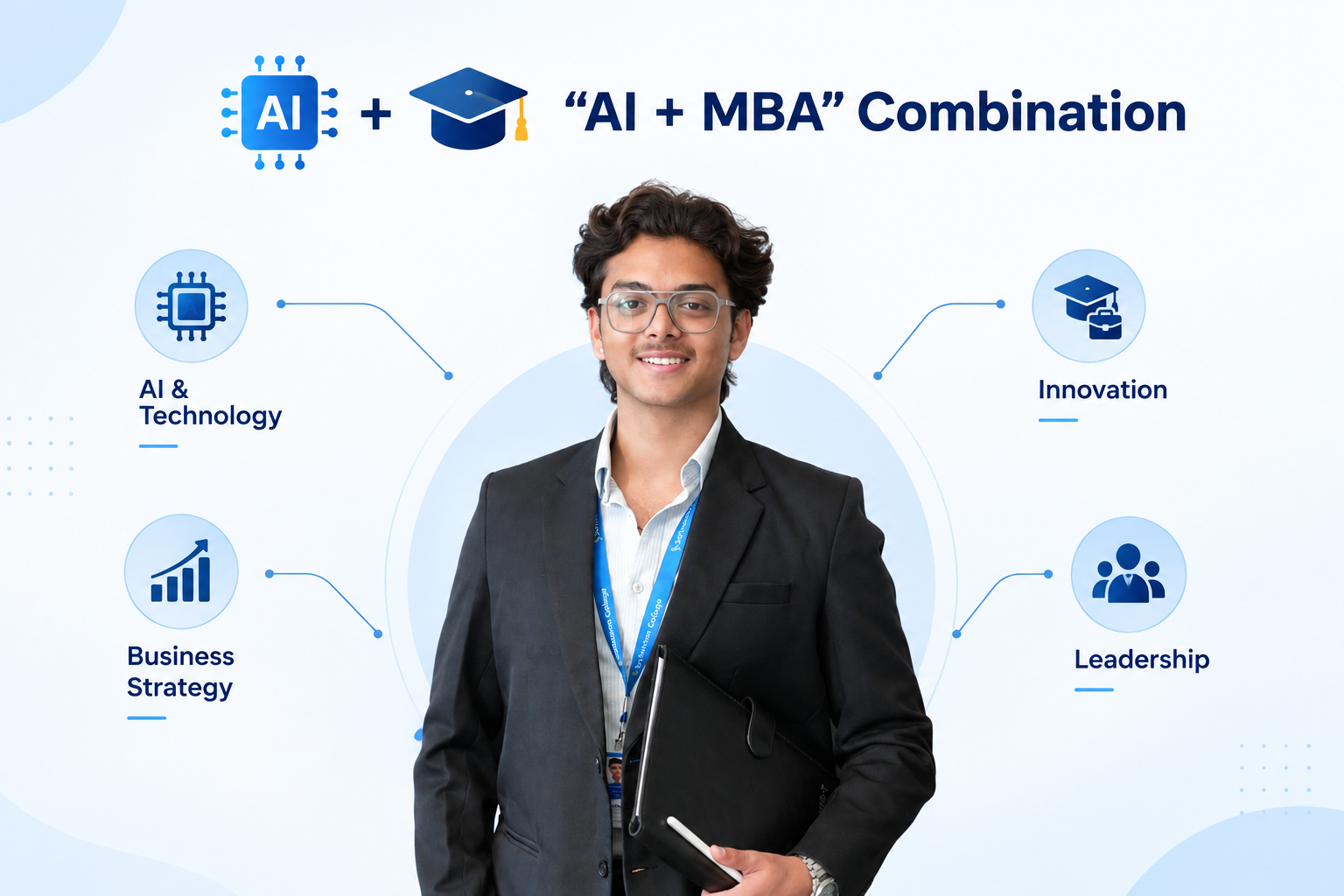
Instead, think of your career profile as a combination:
MBA specialisation + data literacy + AI literacy + human judgement
The combination changes depending on the career.
| MBA pathway | Where AI can influence the work | Skill worth developing |
| Marketing | Customer segmentation, campaign analysis, personalisation | AI-assisted marketing analytics |
| Finance | Forecasting, risk analysis, financial data interpretation | Financial analytics |
| HR | Talent analytics, recruitment workflows, workforce planning | People analytics + AI literacy |
| Operations | Demand forecasting, inventory and process optimisation | Data-driven operations |
| Business Analytics | Predictive analysis, automation and decision support | Analytics + AI applications |
| Consulting | Research, scenario analysis and insight generation | Strategic thinking + AI-assisted research |
The point isn’t that every MBA student needs the same toolkit.
The useful AI skill depends on the business problem you want to solve.
Explore = MBA Jobs After Graduation: Roles That Are in Demand Today
The Biggest Mistake MBA Students Can Make With AI
One of the biggest mistakes MBA students can make with AI is collecting certificates instead of building practical AI skills. A resume with several AI courses may look impressive, but if an interviewer asks, “Tell me about a business problem you solved using AI,” certificates alone may not be enough. A better approach is to build small, measurable projects for example, using AI-assisted analysis to study customer feedback, identify recurring complaints, and suggest improvements in product positioning. This gives students something practical to discuss during interviews, including the problem, approach, findings, and business recommendation. In the end, showing how you applied AI can be more valuable than simply listing AI certifications on your MBA resume.
The “AI Interview Question” Students Should Start Practising
One question MBA students should practise for placements is:
“If AI can do this task, why should a company hire you?”
A weak answer focuses only on knowing AI tools. A stronger answer shows that you can understand a business problem, evaluate AI’s output, and turn information into a practical decision.
This demonstrates an important skill: knowing the difference between information and judgement.
The World Economic Forum highlights analytical thinking as a leading employer skill, while AI and big data are among the fastest-growing skill areas.
For MBA students, the goal isn’t to beat AI at producing information. It is to become better at understanding what information matters and how to use it.
Why Human Skills Are Becoming More Valuable, Not Less
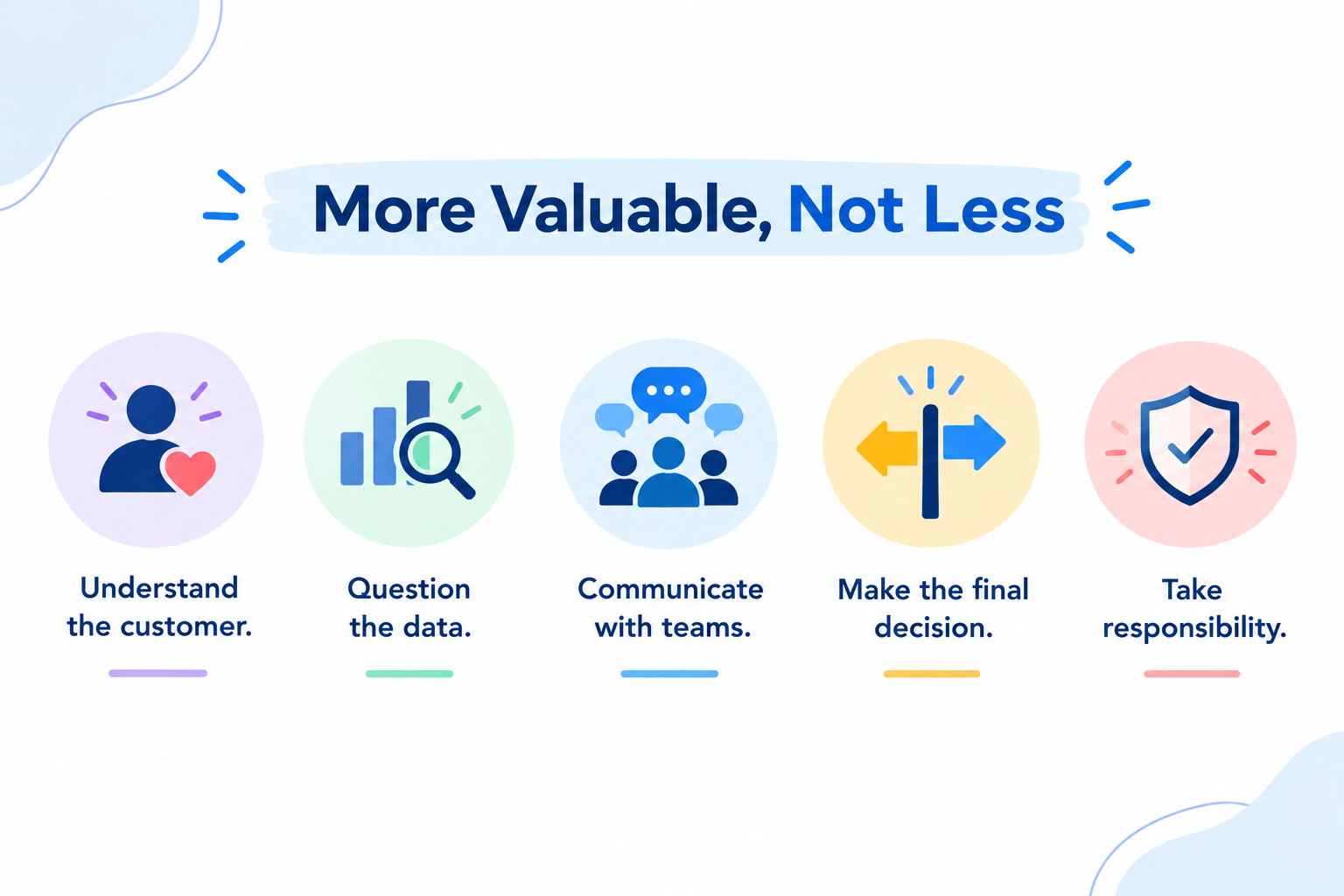
AI may automate tasks, but it does not make human skills less important. Strategic thinking, communication, adaptability and leadership remain valuable alongside AI skills. LinkedIn’s research also shows the growing importance of combining technology with people-focused abilities.
AI can suggest solutions, but managers still need to:
- Understand the customer.
- Question the data.
- Communicate with teams.
- Make the final decision.
- Take responsibility.
That’s where the human side of an MBA continues to matter.
The 30-Day AI Placement Challenge for MBA Students
Rather than vaguely deciding to “learn AI,” students can make their preparation measurable.
Days 1–7: Find the AI use cases
Choose your target MBA career.
Research how AI is already affecting that function.
Don’t start with tools.
Start with business problems.
Days 8–14: Learn the workflow
Choose two or three relevant tools and understand what they can realistically do.
Learn their limitations too.
Days 15–21: Build something
Create a small project connected to your specialisation.
It could be:
- A marketing analysis
- Financial dashboard
- Customer research
- HR analytics case
- Supply-chain forecast
- Consulting case
Days 22–30: Turn it into an interview story
Prepare a five-minute explanation:
Problem → Approach → AI usage → Findings → Business decision → Limitation → Recommendation
Now you have something you can actually discuss during placement interviews.
Explore = The Future of AI in Education: Is It Helpful for Students?
FAQs MBA Students Are Actually Likely to Search
Will AI replace MBA jobs in 2026?
AI may automate some routine tasks, but skills such as strategy, leadership, communication and decision-making will remain important.
What AI skills should MBA students learn?
Focus on AI literacy, prompting, data analysis, AI-assisted research and data visualisation, along with skills related to your specialisation.
Is an MBA still valuable as AI reshapes careers?
Yes, but students should look for programmes that offer practical learning, industry exposure, relevant skills and strong career support.
Do MBA students need coding to learn AI?
No. Most management roles require AI understanding and practical application rather than advanced programming.
Which MBA specialization is best for AI careers?
Business Analytics has a strong connection with AI, but Finance, Marketing, HR, Operations and Consulting are also being influenced by AI.
Final Takeaway
AI won’t make the MBA useless, but it is changing what employers expect from MBA graduates. Students who combine business knowledge, AI literacy, analytical thinking, communication and strategic judgement can build stronger career profiles.
Focus on using AI, not just learning it.” Ask instead, “Which business problem can I solve better with AI?” That shift can turn AI from a resume keyword into a real career advantage.