

Biotechnology is no longer a “future field” in India it is already shaping healthcare, agriculture, pharmaceuticals, and environmental science today. After completing a BSc, many students feel stuck at the same question: Is MSc Biotechnology the right next step? The answer depends on how clearly you understand what this course actually builds in you beyond the degree name.
MSc Biotechnology is not just an academic upgrade; it is a transition into applied science where research meets real-world problem solving. From vaccine development to genetic engineering, the field sits at the center of modern scientific progress in India.
Quick Overview (For Fast Understanding)
MSc Biotechnology is a 2-year postgraduate program that focuses on advanced biological sciences, research techniques, and real-world industrial applications. It opens diverse career opportunities in sectors like pharmaceuticals, healthcare, agriculture, and research & development. Admission is usually based on a relevant BSc background, often along with entrance exams depending on the university. The course is designed to combine theoretical knowledge with strong lab-based practical skills, making students industry-ready.
What MSc Biotechnology Actually Builds (Beyond the Degree)
Most students misunderstand MSc Biotechnology as just “more biology.” In reality, it is structured to train you in:
- Molecular biology techniques used in diagnostics and research labs
- Genetic engineering and recombinant DNA technology
- Bioinformatics tools used in modern research analysis
- Industrial biotechnology used in pharma and food industries
According to the Department of Biotechnology, Government of India (DBT), biotechnology plays a major role in advancing healthcare innovation, sustainable agriculture, and vaccine development areas where skilled postgraduates are in demand.
Who Should Consider MSc Biotechnology After BSc?
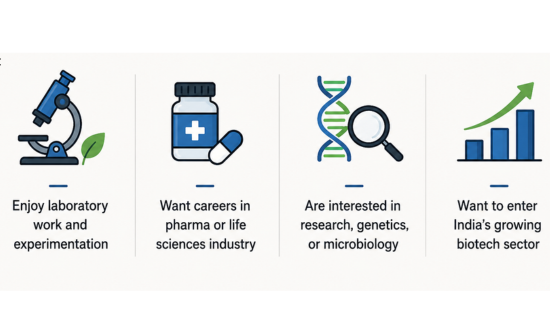
This course is not just for top rankers or research aspirants. It is suitable for students who:
- Enjoy laboratory work and experimentation
- Want careers in pharma or life sciences industry
- Are interested in research, genetics, or microbiology
- Want to enter India’s growing biotech sector
If your BSc gave you curiosity about “how life works at a molecular level,” MSc Biotechnology gives you tools to work on it professionally.
Explore = A Career In MSc Biotechnology
Core Areas You Study in MSc Biotechnology
Instead of memorizing subjects, this course focuses on understanding systems and solving biological problems.
You typically study:
- Molecular Genetics
- Immunology and Cell Biology
- Enzyme Technology
- Bioinformatics & Computational Biology
- Industrial and Environmental Biotechnology
The practical lab training is equally important because industries value hands-on experience more than theory alone.
Career Scope After MSc Biotechnology in India
Biotechnology in India is steadily expanding as industries increasingly rely on biological research for healthcare, pharmaceuticals, and innovation.
Career Opportunities Table
| Career Role | Sector | Expected Starting Salary |
| Research Assistant | Research Labs | ₹3–5 LPA |
| Biotech Analyst | Pharma Industry | ₹4–6 LPA |
| Quality Control Executive | Food & Pharma | ₹3–5 LPA |
| Clinical Research Associate | Hospitals/Trials | ₹4–8 LPA |
| Bioinformatics Specialist | IT + Biology | ₹5–10 LPA |
Explore = Future Scope of MSc Pharmaceutical Chemistry in India
Top Recruiters & Industry Demand in India”
This boosts authority and trust.
Include:
- Pharma companies (biotech divisions)
- Research labs and diagnostic centers
- Agricultural biotech companies
- Healthcare and clinical research organizations
Why Practical Learning Matters More Than Theory
One of the biggest gaps students face after MSc Biotechnology is lack of practical exposure. Employers look for candidates who can:
- Handle lab instruments confidently
- Understand real-time experimental errors
- Work in research-based environments
- Apply biological concepts in industrial setups
This is where institutions with strong laboratory training and industry exposure make a difference.
Admission Pathway in India (Simple Breakdown)
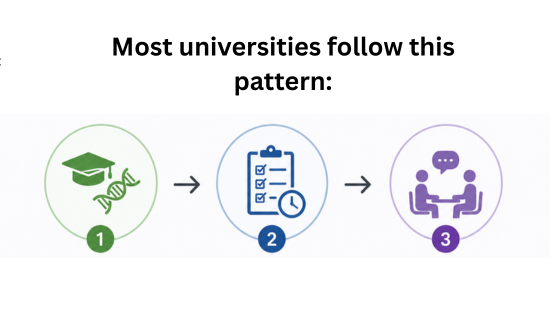
Most universities follow this pattern:
- BSc in Biotechnology / Life Sciences / Biology-related stream
- Entrance exams (varies by university)
- Merit-based or interview selection in some colleges
Some institutions also provide direct counseling-based admission depending on eligibility criteria.
Eligibility: Who Can Apply for MSc Biotechnology After BSc?
The basic eligibility for MSc Biotechnology after BSc is straightforward, but the specific requirements do vary by university.
General Eligibility Criteria:
| Criterion | Typical Requirement |
| Qualifying Degree | BSc in Biotechnology, Microbiology, Biochemistry, Zoology, Botany, Chemistry, or Life Sciences |
| Minimum Marks | 50–55% in BSc (45–50% for reserved categories) |
| Admission Route | Entrance exam (national/state/university level) or merit-based |
| Age Limit | Generally no upper age limit for regular MSc programmes |
| Lateral Entry | Not typically available; must complete 3-year BSc |
Students from BSc Agriculture, BSc Bioinformatics, or BSc Genetics may also be eligible at many universities always check the specific prospectus rather than assuming.
Why Biotechnology Is Growing in India
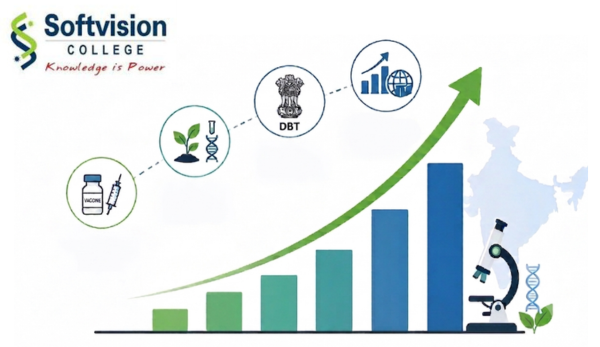
India’s biotech sector is expanding due to:
- Vaccine research and healthcare innovation
- Agricultural biotechnology advancements
- Government support through DBT initiatives
- Rising biotech startups and pharma exports
This growth makes MSc Biotechnology a strategically relevant course, not just an academic choice.According to research on India’s biotechnology sector growth published in PubMed Central, the industry is expanding rapidly…
FAQs (Student-Focused & Practical)
1. Is MSc Biotechnology a good career option in India?
Yes, it offers strong opportunities in pharma, research, healthcare, and bio-industrial sectors.
2. Can I do MSc Biotechnology after BSc in any science stream?
Most universities require a biology-related background like Biotechnology, Zoology, Microbiology, or Life Sciences.
3. What is the scope of MSc Biotechnology in government jobs?
You can apply for research institutes, public sector labs, and exams like CSIR-NET for research careers.
4. Is lab experience important in this field?
Yes, practical lab skills are essential for almost all biotech industry roles.
5. What is the highest career growth in biotechnology?
Research scientist, bioinformatics expert, and biotech project lead roles offer strong long-term growth.
Final Insight: Choosing the Right Learning Environment
The value of MSc Biotechnology depends not just on the syllabus but on how much practical exposure and research environment you get during the course. Students often benefit from institutions that focus on lab training, industry alignment, and skill-based learning rather than only theoretical teaching.
One such option students explore for advanced learning in life sciences and biotechnology education is best colleges in Indore offering MSc programs after BSc, where emphasis is placed on practical exposure, academic guidance, and career-oriented development in science programs.